
Whether you’re ready to launch your photo booth rental company today or you’re just exploring the idea, you have picked the absolute best time to look into it. Welcome to the ultimate guide on starting a photo booth business.
Let’s get straight to it!
An Incredible Time for Innovation
First, we have to point out what an incredible time it is to be in the photo booth industry. Sure, a hundred years ago when they were first invented, it was probably pretty exciting. But right now, in 2026? The creativity and possibilities are truly endless.
Think about the sheer speed of innovation we’ve experienced recently. Since 2019 alone, a massive new format has hit our industry roughly every year and a half. We’ve seen the rise of viral, Kardashian-style glam booths. We watched spinning 360 booths take over weddings. We’ve seen cinematic robot arms bring the camera in close for music-video-style clips, and now, we have jaw-dropping AI portraits.

And that’s not even mentioning the smaller, brilliant niches: robot arms that draw your sketch, high-angle booths coming out of LA, custom keychains, and trading cards.
The upside to all of this? Opportunity is everywhere.
If you want your new business to specialize in something, you do not have to look very far to find a highly unique offering that your local competitors haven’t even heard of yet.
The Ultimate “AI-Proof” Business
You might be thinking, “With all this talk about AI and digital technology, are physical photo booths still relevant?”
The answer is a resounding yes. In fact, they are thriving because of it.
As our daily lives become increasingly saturated with screens, algorithms, and chatbots, humans are actively seeking out real, in-person socialization. Live events have become our ultimate escape. People want to gather, celebrate, and create tangible memories together in the real world.

The photo booth industry is beautifully “AI-proof.” While we use incredible AI technology inside the booth to create stunning images and effects, the core experience—laughing with your friends, posing with silly props, and walking away with a shared memory—is a deeply human connection that software simply cannot replace.
The age of the smartphone selfie has not dimmed the consumer appetite for photo booth pictures; it has only made people crave elevated, interactive photo opportunities even more.
Why Start a Photo Booth Business?
“The things you regret most in life are the risks you didn’t take.”
— Lewis Carroll
Future Market Insights reports that the global photo booth market is on a massive upward trajectory, with revenue expected to jump from $584.7 million in 2025 to an estimated $1.56 billion by 2036. Photo booths have grown from being a mall novelty to an absolute staple at every special occasion.
Beyond the market growth, becoming the owner of a photo booth business is an exciting, highly profitable life choice that doesn’t require massive upfront capital or a 60-hour work week.
Some of the biggest advantages include:
- Low start-up costs: You can launch a professional photo booth business for under $10,000.
- High earning potential: You’ll get out of it what you put into it, but it’s not unusual to earn $50,000 per year with a single booth—and much more if you scale your fleet.
- Endless client variety: You’re spoiled for choice among potential clients, from retail activations and corporate galas to high-end luxury weddings.
- Highly scalable: It’s relatively easy to grow a photo booth business while keeping overhead expenses low.
- The ultimate high-margin upsell: If you are already an established event professional—such as a DJ, a photographer, or an event venue owner—a photo booth is a seamless expansion. You already have the booked dates and client trust; adding a sleek photo booth to your packages allows you to instantly increase your average revenue per event with virtually zero extra marketing effort.
- Flexible lifestyle: You can shape this business to fit your needs. Run it as a “weekend warrior” side hustle or go all-in full-time from the start.
- Portable and easy to run: With the right equipment, you can easily transport your business across town. Plus, operating a modern booth is so straightforward that training assistants is a breeze.
- Repeat business: Keep your corporate and seasonal clients happy, and they’ll hire you year after year.
Is a Photo Booth Business Right for You?
Starting a business isn’t for everyone. To thrive as a photo booth owner, it needs to be the right fit for your personality and goals. How many of the following statements apply to you?
- You’re excited by the idea of a fresh challenge.
- You’re looking for a business with low financial barriers to entry.
- You want a flexible side hustle to earn extra cash on your own terms.
- You already own an event-based business (like DJing or photography) that would benefit from an add-on service.
- You don’t mind working weekends and attending lots of parties and events.
- You have good customer service and communication skills.
- You genuinely get a kick out of making people smile.
If you were nodding your head while reading that list, keep scrolling. We’re going to teach you how to launch (and grow) a photo booth business step-by-step.
Step 1: Pick Your Lane 👥
“Everyone is not your customer.”
— Seth Godin
When you first launch a photo booth business, it is incredibly tempting to adopt the mindset that you will simply “do any event that pays.” After all, part of what makes this industry so exciting is its sheer versatility. On any given weekend, you could be at a luxury wedding, a corporate holiday party, a retail grand opening, or a high school prom.
However, the downside to this versatility is that trying to be a “jack of all trades” can severely dilute your brand. If your website tries to appeal to a corporate marketing director with data analytics, while simultaneously advertising oversized neon props for a child’s birthday party, you end up confusing both clients.
The goal of defining your target market is to ensure that when your ideal client lands on your website, they immediately think, “This company specializes in exactly what I need.” When you achieve that level of alignment, you don’t have to sell them; they are already convinced.
Understanding the Primary Photo Booth Markets
While you will inevitably book a diverse range of events over the lifespan of your business, you should build your initial brand identity around one primary market. Here is a look at the three most common—and profitable—avenues in the industry today:
1. Luxury Weddings & Galas
In this market, your primary clients are engaged couples and professional event planners who value aesthetics and elegance above all else. They expect flawless, studio-quality lighting, sleek equipment that blends seamlessly into high-end decor, and elegant backdrops like custom flower walls.

Advanced software features, particularly the Kardashian-style “Glam” filter that provides high-contrast, skin-smoothing black-and-white portraits, are practically mandatory here. Printing is also still popular at weddings in 2026.
The business model for this lane revolves around high-ticket pricing. You will likely take on fewer overall events throughout the year, but you will charge a premium rate by focusing heavily on delivering a true “white-glove” customer experience.
2. Corporate Events & Brand Activations
When you target the corporate world, your clients are ad agencies, marketing directors, HR managers, conference organizers, and consumer brands.
These clients aren’t just paying for fun photos; they are paying for marketing ROI. They expect features like data capture (securely collecting emails and phone numbers), custom-wrapped photo booths, and digital overlays that prominently feature their company logo. Your job is to provide them with detailed post-event analytics reports showing exactly how many times their brand was shared on social media.
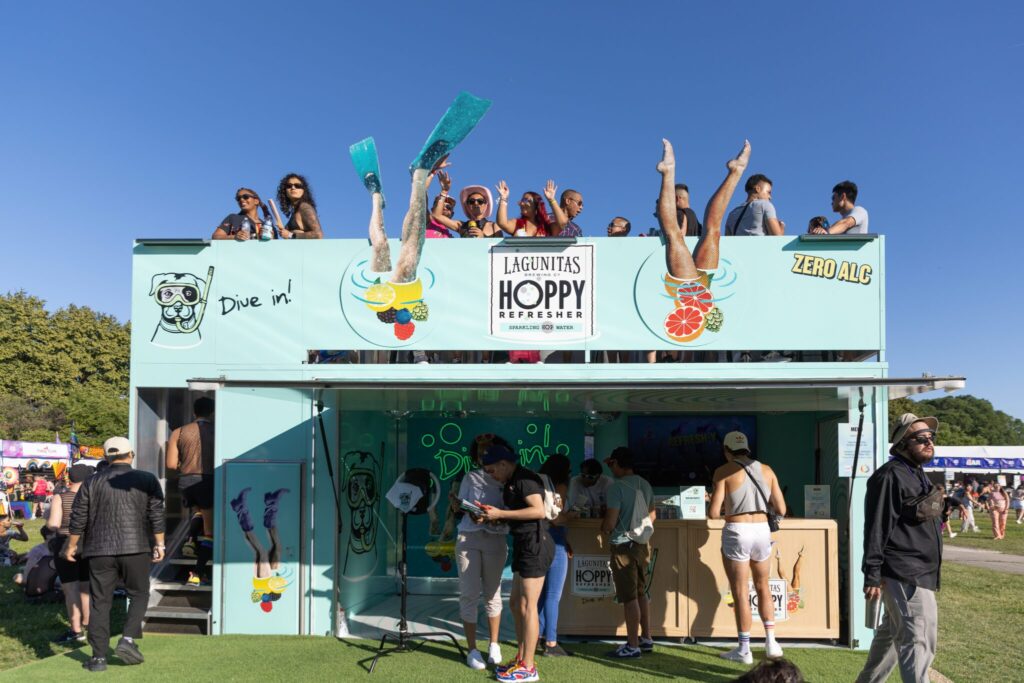
According to Future Market Insights, “Corporate brand activations carry margins three to five times higher than wedding and social event rentals, creating a two-tier market where operators that secure corporate clients generate disproportionate revenue.”
This is a highly lucrative lane built on recurring clientele; if you prove your value at a corporate holiday party or a multi-day convention, that company is likely to hire you year after year with massive budgets.

Pro Tip: To learn more about the corporate activation space, start with experiential marketing.
3. High-Energy Social Parties
If you want to focus on volume, the social party market targets parents, schools, and private hosts organizing Proms, Bar/Bat Mitzvahs, Sweet Sixteens, and large birthday bashes. The expectation here is maximum fun and high-energy interaction.

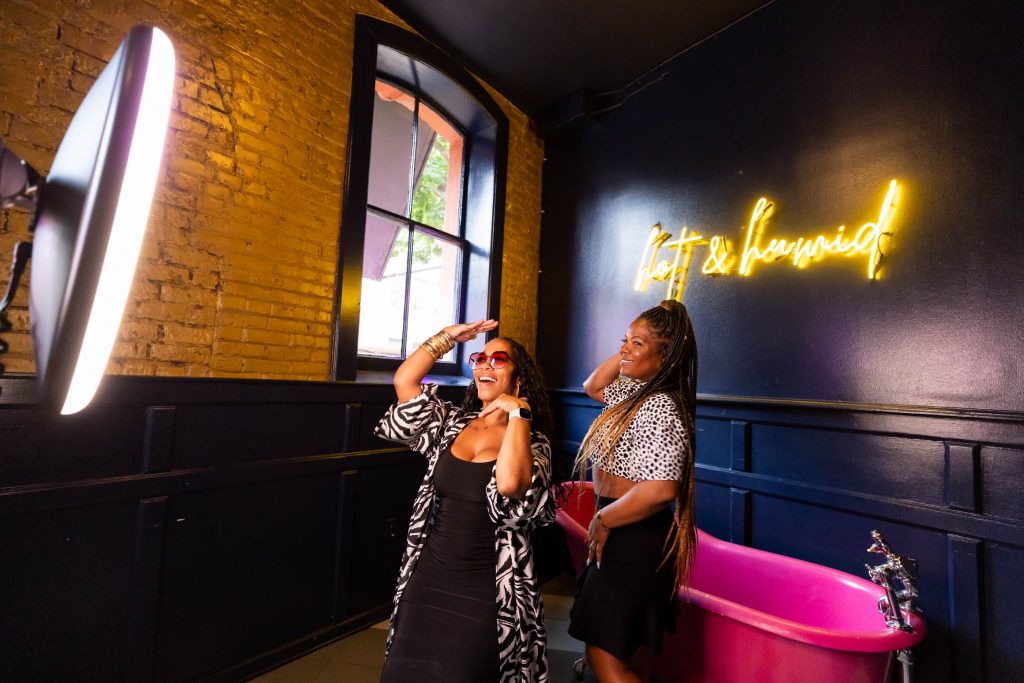
This market favors dynamic experiences like GIFs, boomerangs, vibrant neon signs, and instant text delivery for fast-paced social sharing. While your individual package price point might be lower than a luxury wedding, you make up for it in sheer volume by booking multiple parties every single weekend, fueled by rapid, highly visible word-of-mouth within local communities.
A newer trend for parties is called a “digital drop-off.” In this type of rental, the host will be responsible for the equipment at the event, allowing you to scale to more events without having to stay on-site at each. In a variation of this, the client even picks up the photo booth from you and returns it after the event.
Finding the “Gap” in Your Local Market
To decide which of these markets to pursue, you need to conduct a bit of local research. Look at the other photo booth businesses operating in your city and ask yourself: Where is the gap?
If you realize that your local market is oversaturated with companies fiercely competing over budget-friendly backyard parties, that is your cue to elevate your brand and target the luxury wedding sector. Conversely, if everyone in your town is solely focused on weddings, you have a massive opportunity to become the undisputed, go-to expert for corporate brand activations.
Defining your target market early ensures that every subsequent decision you make is aligned with attracting that specific group. Most importantly, it dictates exactly what type of equipment you will need to invest in. You do not want to purchase a massive, heavy 360 video booth only to realize your ideal clients are hosting intimate, elegant weddings in tight venues.
Once you know the type of audience you want to serve, let’s move on to building your budget and selecting your gear.
Step 2: Build a Budget 🤓
“Price is what you pay, value is what you get.“
— Warren Buffett
For many entrepreneurs, the relatively low cost to start a photo booth business is one its most appealing features. You don’t need an expensive storefront or a bunch of employees to get started. With the right equipment, targeted advertising, and the ability to handle events on your own, you can launch a successful business from home.
Types of Photo Booths
One of your biggest initial investments will be the photo booth and the equipment that enables you to capture quality photos. The type of booth you choose will depend upon the size of your budget, the clientele and events you intend to serve, and your brand’s unique selling proposition.
Photo booths come in a variety of styles and options. Here is a look at the modern landscape:
Freestanding Photo Booth
Also known as an “open-air” photo booth or selfie station, freestanding booths are the most common type of booth in the industry. They are highly portable, visually sleek, fit large groups of people easily, and feature interactive touchscreens.
The best part about modern freestanding booths is that their experience can be completely transformed purely through software. You don’t necessarily need to buy a brand new piece of hardware to offer a high-end, skin-smoothing Glam Booth effect or a jaw-dropping AI Portrait Booth (where guests are instantly transformed into oil paintings or comic book characters). You can simply upgrade your software tier, add a premium physical backdrop, and upcharge for these highly sought-after experiences using the exact same freestanding equipment.
360 Booths
360 booths physically spin a camera around your participants on a platform, capturing high-energy, slow-motion video of them having the time of their lives. These booths became a massive staple at parties and experienced a huge boom from 2021 to 2024.
Since then, the market has become somewhat saturated and growth has leveled off, but they remain a popular request for high-energy social events. If you are looking to enter this specific market, popular hardware manufacturers include OrcaVue and PBSCO (with their Tortilla 360).
Cinematic Robot Arms
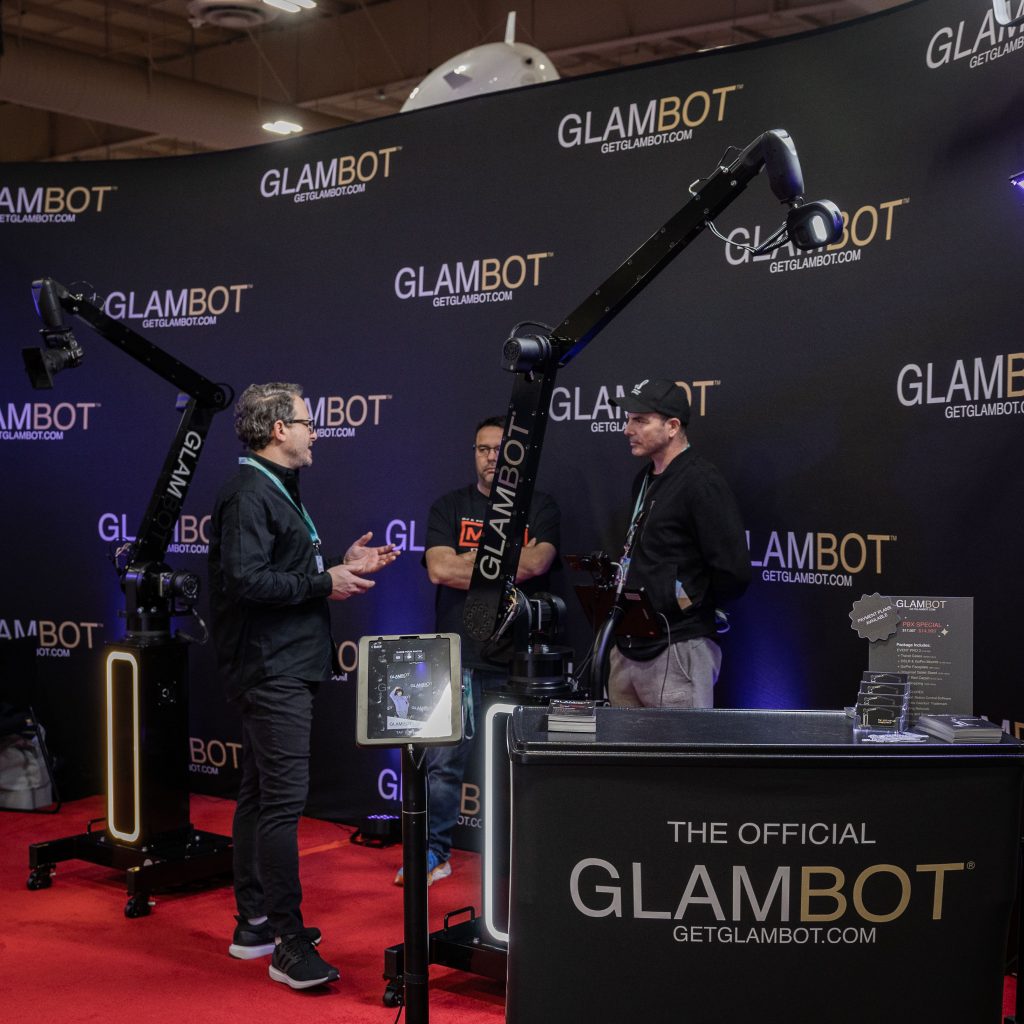
Cinematic robot arms (made famous by companies like GlamBot on celebrity red carpets) are the new, premium video offering for corporate events and high-end celebrations. These programmable robotic arms swing a high-speed camera toward the subject, creating stunning, music-video-style clips.
You can charge a significant premium for specialized activations like this.
However, they require a much higher initial financial investment, massive physical space, and extensive setup time. There is also the lingering question of whether they will continue to dominate the premium market, or if rapidly advancing AI video effects will soon be able to imitate the exact same cinematic movement with far less equipment.
Mirror Booths
Mirror booths look like large, elegant full-length mirrors but function as massive interactive touchscreens. Because they typically run on a PC and require complex internal hardware, they can offer a very impressive “wow” factor for guests.
However, that impressive size comes with a major downside: they are incredibly bulky, heavy, and difficult to transport. Moving a mirror booth often requires a large vehicle, protective flight cases, and two people to safely load and unload, making it a tough choice for a solo entrepreneur just starting out.
Traditional Enclosed Photo Booths
These are the classic booths that you remember from malls and arcades, complete with a velvet curtain and automated prints. While they still hold a certain nostalgic or novelty value for some clients, they are generally very heavy, expensive to buy, and time-consuming to set up and transport.
Because they are much less versatile than open-air options and limit how many people can squeeze into a single photo, we usually do not recommend starting a new company with this style, unless you are absolutely sure that your target market wants it.
Buying a Photo Booth
Prices vary greatly for photo booths. You can build a do-it-yourself photo booth for as little as $300, buy a dazzling open-air digital booth with all the technological bells and whistles for $3,000, order a big vintage-style traditional booth with print photos for $10,000, or anything in-between. You could also make your business unique by offering a 360 degree photo booth or a large freestanding mirror, which tend to be more specialized and more expensive.
The wide range of options is good news for aspiring photo booth entrepreneurs because it means you can start a business regardless of the size of your budget. That said, the photo booth must meet the needs and expectations of your clientele. If you’re planning to target clients throwing large extravagant weddings, a scrappy $300 photo booth is highly unlikely to get the job done.
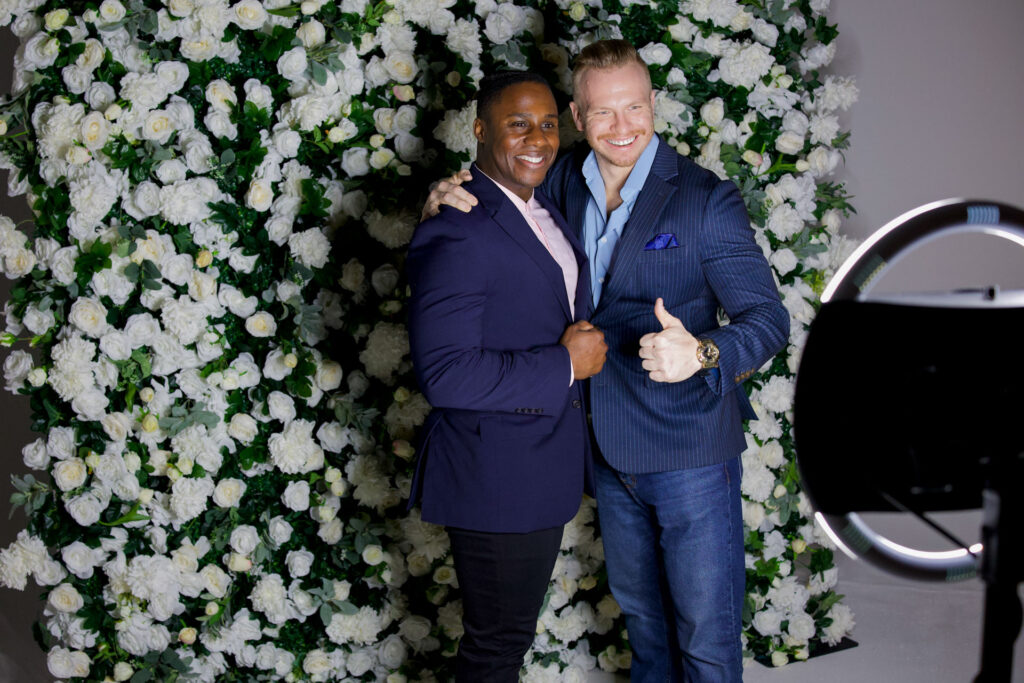
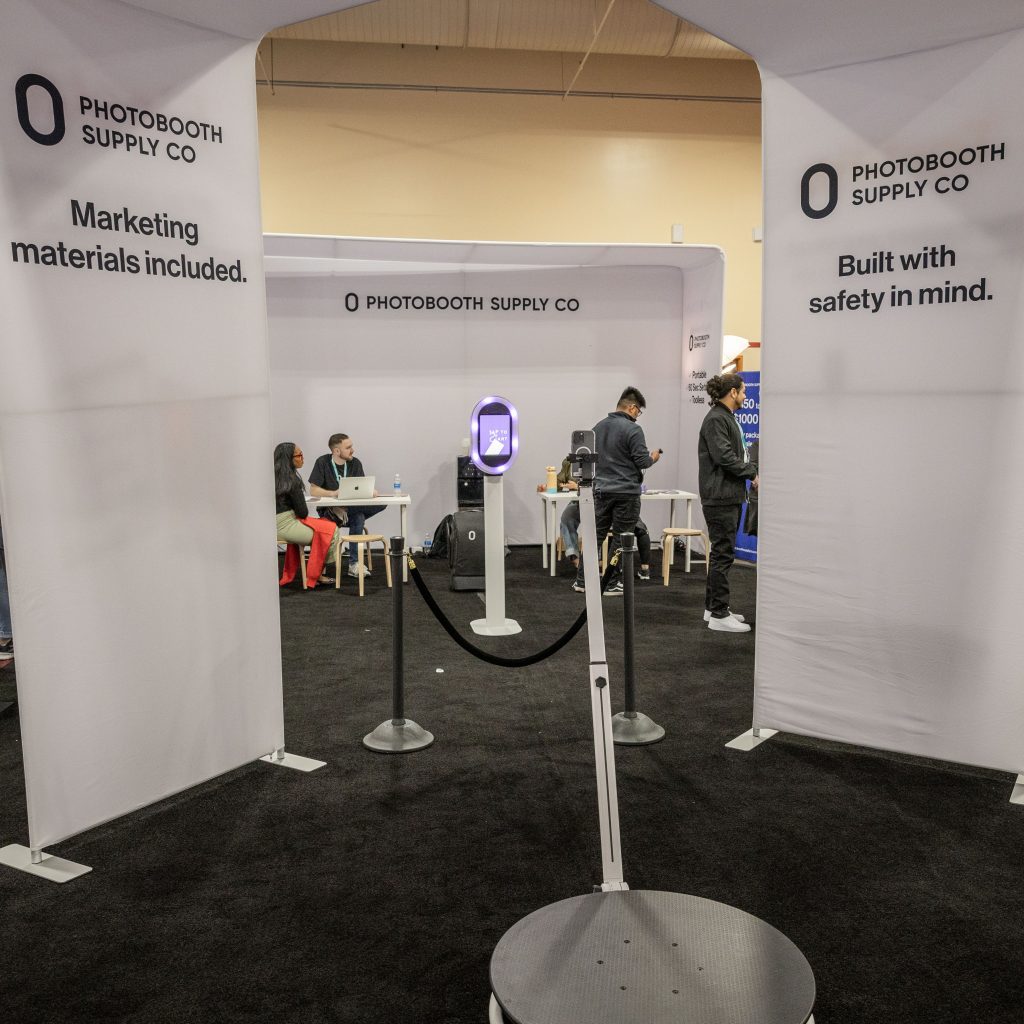
We recommend a freestanding photo booth for most new companies because they appeal to a broad audience, are highly versatile, and affordably priced. A few of the most popular manufacturers include Simple Booth, MobiBooth, Danny Max, and Photo Booth Supply Co.
Now, let’s break down some of the components and features to consider when shopping for this kind of photo booth. It’s always a smart practice to purchase these components from a single vendor to ensure they work well together.
1. The Enclosure, Touchscreen, & Camera
When shopping for a freestanding booth, the easiest way to understand your options is to separate the touchscreen interface (what runs the software) from the camera (what takes the photo).
The Touchscreen Interface: In the early 2000s, most photo booths were powered by bulky Windows PCs hidden inside heavy casing. Today, iPad-based enclosures have largely taken over the market. An iPad provides a sleek, responsive touchscreen for guests to interact with, connects seamlessly to Wi-Fi or cellular data for instant social sharing, and offers a convenient and reliable experience for the operator.
The Camera: Most professional iPad photo booth apps support either using the built-in iPad camera or connecting an external DSLR or mirrorless camera for higher image quality. Each has its advantages and trade-offs:
Integrating a DSLR / Mirrorless Camera: If your target market demands true, traditional high-end photography, you can mount a DSLR camera inside the booth enclosure and connect it to the iPad through a USB hub. The DSLR captures the high-resolution photo, while the iPad acts as the control screen and sharing station. While this provides the ultimate image quality, it does require more technical troubleshooting, power management, and a foundational knowledge of photography lighting.
Using the iPad Camera: While lower resolution than a DSLR, the built-in iPad camera is popular because it’s so reliable and easy. There are very few points of failure. It just takes pictures like it’s supposed to. And, thanks to massive advancements in photo booth software, top-tier apps like Simple Booth HALO can now apply digital background blur and advanced processing to produce images that look remarkably close to a professional camera. This is the easiest, most frictionless setup for new business owners. Especially if you are going to be transforming photos with AI, the iPad camera will work just fine.
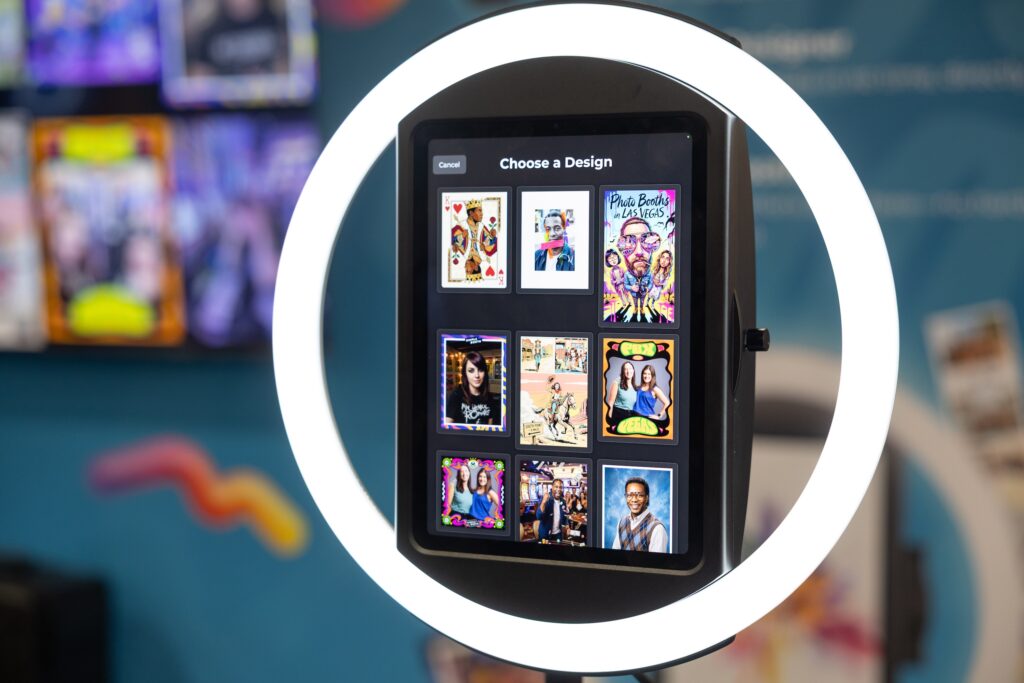
Open-air photo booths can have very different aesthetics, from being old-fashioned and boxy to sleek and compact with modern curves. DSLR-based models will often come as an empty shell with places for power and wires to go, giving you the option to select your own components inside.
The key aspects to consider are how sturdy it’s designed and constructed, whether it handles power and lighting for you, the size, weight, and ease of setup. You may want to ask your photo booth vendor if they have a video or setup instructions before you purchase so you can visualize what you will need to do before and after every event.
Investing in a photo booth enclosure that is sturdy, convenient, and visually-attractive will be worth your while.
2. The Stand
The stand is often overlooked in the purchasing decision, but can become a major benefit or pain point later on. Here are some things to consider:
- How does the stand break down and assemble?
- Is it sturdy or does it wobble when guests interact with the screen?
- Can it raise or lower for different types of events?
- Can it tilt up and down for camera angle adjustments?
- Does it have a brand-able surface?
- Does it fit in the same case as the enclosure or does it require a separate case for transport?
We’ve never seen a stand that checks all the boxes, so asking these questions will help you better understand what you’re in for.
3. Lighting
Lighting is the single most important factor separating amateur setups from luxury, high-end photo booths. You can have the best camera in the world, but if your lighting is flat, dark, or creates harsh shadows, your photos will look cheap.
Many entry-level booths rely on built-in RGB rings that mix red, green, and blue LEDs to “fake” white light. Unfortunately, this often results in muddy, unnatural skin tones and isn’t bright enough to produce high-quality, vibrant images.
To command premium prices, you need a photo booth that utilizes high-quality, continuous LED lighting that surrounds the camera lens. This floods your subjects with soft, flattering, shadow-free light that makes everyone look flawless, while still allowing you to capture crisp videos and Boomerangs.
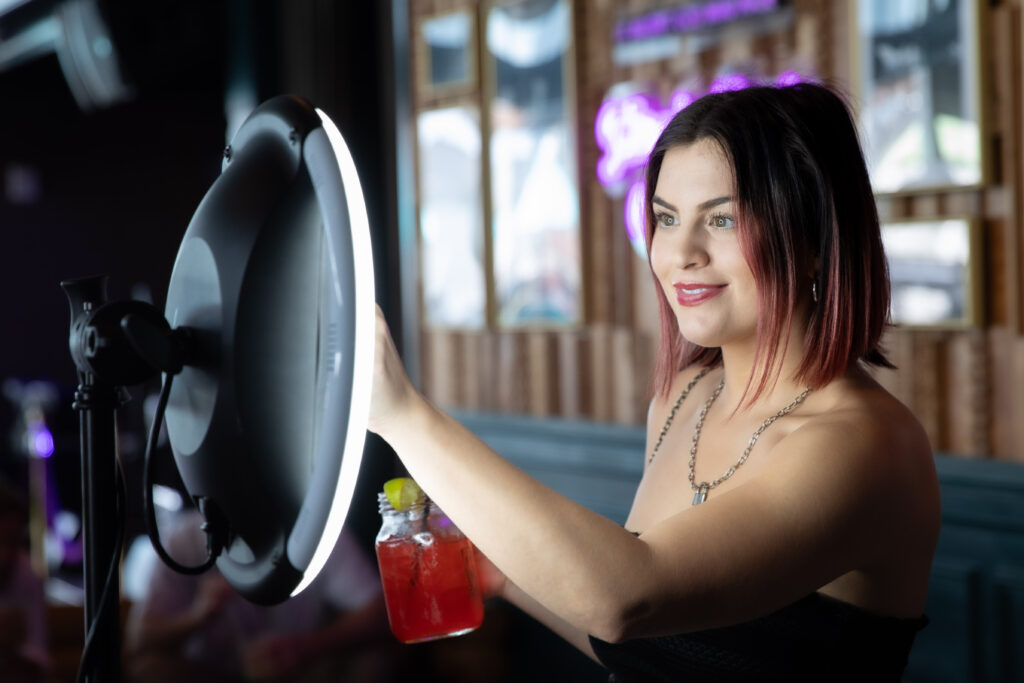
Pro tip: Want to completely master your image quality and outshine your competitors? Read our Ultimate Photo Booth Lighting Guide for Professional Results!
4. Photo Booth Software
In 2026, software isn’t just a camera and countdown anymore—it is at the core of your business. It determines your ultimate image quality, what experiences you can offer to clients, and what your time in the office looks like as you prepare for events.
Top-tier software like Simple Booth do the heavy lifting for you. Beyond standard features like GIFs, text/email delivery, and customizable branded overlays, modern software transforms a basic photo into a premium portrait. With elite software processing, you can offer advanced digital background blur (bokeh), AI transformations, green screen replacement, and flawless skin-smoothing glam filters that keep essential details tack-sharp.
Most professional photo booth software plans range from $49-149 per month. Keep in mind, you “get what you pay for.” A cheap app on the App Store that only costs a few bucks is highly unlikely to have the advanced processing power, analytics, or reliable offline-queuing support you need for professional use.
Software is usually priced per booth, with many companies offering monthly or even weekly plans so you only pay when you have events.
5. Printer & Printer Media
If you plan to offer prints, you’ll need a high quality photo printer with at least 300 dpi resolution that can keep up with a line of eager participants. You will need to consider factors like print speed, paper sizes, and media cost. Quality printers can cost $500 to $1000. Ink and photo paper can cost $50 or more per event.
Pro tip: Offering prints can affect whether you need to collect sales tax in some states. Digital delivery of photos is more likely to be exempt from sales tax than physical prints.
FURTHER READING: Buyers Guide: The Top Photo Booth Printers
6. Travel Case
Freestanding photo booths are designed to be portable, but some are easier to transport than others. A proper travel case is essential to protect your investment and keep everything organized on the go. Expect to spend at least $500 for a durable case that fits your full setup.
For the best fit and protection, it’s usually best to purchase your case from the same vendor as your booth. Some systems are designed to pack efficiently into a single case, while others require separate cases for the body and stand—something to keep in mind as you compare options.
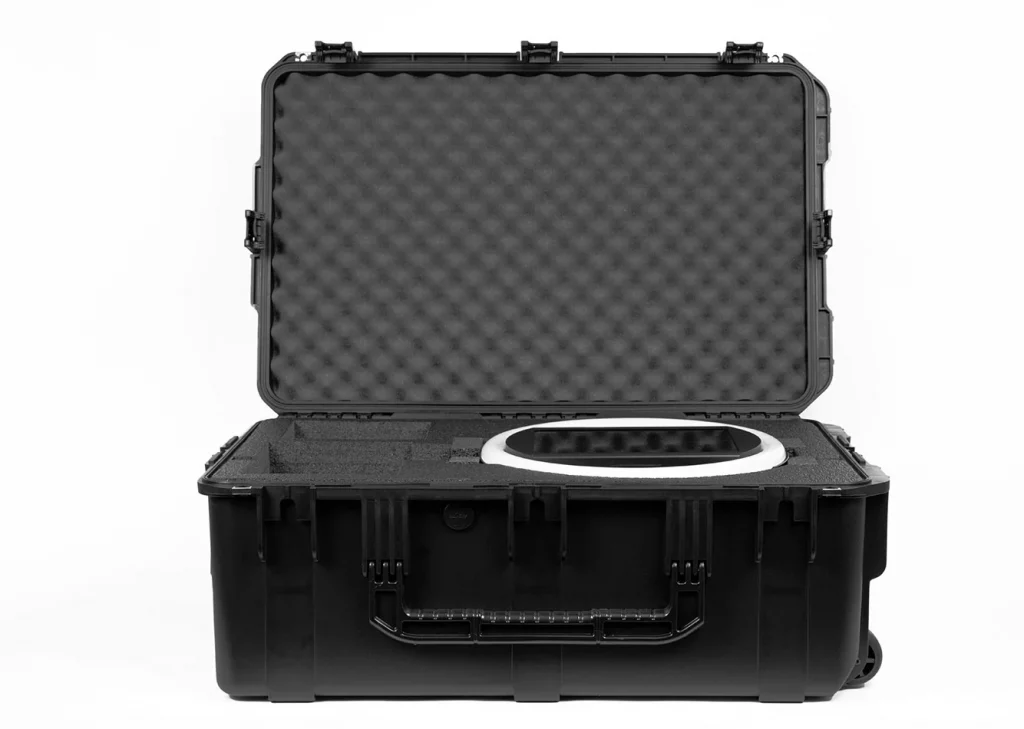
When you factor in transport, protection, and setup time, the practical side of running a photo booth becomes just as important as the gear itself. If you’d rather avoid piecing all of this together yourself, there’s a better way.
Of course, your booth setup is just one part of running a successful business.
Additional Costs
Beyond having an actual photo booth you can rent, you should consider what items you’ll need to provide a great experience to your clients and be able to operate your business efficiently during the week. Here are some things to think about.
Props
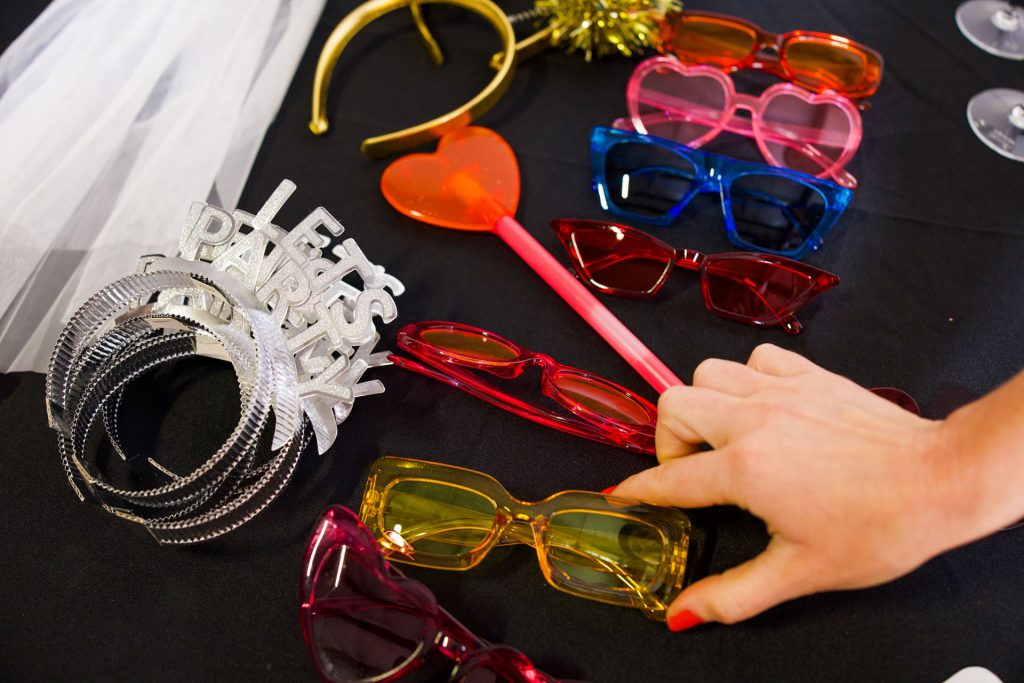
People love to enhance their photos with props like oversized sunglasses, cowboy hats, or electric-colored feather boas. Depending on the range of goodies you want to offer, plan on a budget of $50 to $150.
Backdrops
While you can always point your photo booth into the party, most clients will prefer the clean and polished look of a dedicated background. This is usually achieved with an 8×8′ backdrop support system and full length, fabric backdrops. You could start with one or two backdrop options and add more to your library as your business growths. If you want to offer green screen for corporate events, you might consider purchasing a wrinkle-free, fabric green screen.
Marketing Materials & Branding
To get the word out about your business, you’ll need to produce polished branding and marketing materials, including a website, business cards, logo, and more. Marketing costs can vary wildly, from under $500 if you do it on the cheap to thousands or tens of thousands if you hire a design or ad agency.
Some economical ways to get started include hiring designers on a crowdsourcing platform like upwork.com or 99designs.com. These sites let you post projects with a set price to keep your costs in check.
Incorporation Fees
If you decide to formalize your business’s legal structure, add in associate fees ranging from $300-500, depending on your state and the type of structure you choose.
Software to Manage Your Business
It’s good to sign up early for an online accounting software like Freshbooks, Quickbooks, or Xero to enter expenses into, invoice customers, and process payments.
Per event costs: Tracking your per event costs separately—like printer media or parking fees—helps to ensure you have a healthy profit margin on all your packages.
Project Management or Photo Booth Booking Software
As your company grows, you will have more and more things to keep track of. It’s a good idea to make life easy on yourself with a tool to keep track of it all! For project management, popular services include Monday.com and 17 Hats.
There is also dedicated software for managing photo booth bookings like Check Cherry or Booth Book that can do project management and more, even improving your customer experience by making it easy to reserve a date and purchase a package online.
Miscellaneous
You’ll also have to pay for expenses such as domain name registration fees, power cables, and other small items that can add up. Build in a cushion of at least $300 to account for these extra costs.
Sample Budget for a New Photo Booth Company
| One-time Costs | Estimated Range |
| Photo booth with camera, lighting, stand & case | $5,000-10,000 |
| Printer and media (optional) | $1,200 |
| Branding & marketing materials | $500-5,000 |
| Props | $50-150 |
| Backdrop stands and fabric (optional) | $500 |
| Incorporation (optional) | $300-500 |
| Miscellaneous | $300 |
| Total | $6,000-15,000 |
| Monthly Costs | Estimated Range |
| Photo booth software | $29-150 |
| Online accounting software | $6–30 |
| Project management or booking software | $10–30 |
| Business insurance | $50–100 |
| Staff for events | Varies |
| Total | $100-300 |
| Per Event Costs | Estimated Range |
| Printer media (optional) | $0.12-0.25 per print |
| Staff (optional) | $10–18 / hr |
| Transportation, gas | $10-25 |
| Parking fees | $0-30 |
Step 3: Create Your Business Blueprint 📐
“If you don’t know where you’re going, you’ll end up someplace else.“
-Yogi Berra
Starting a photo booth business is much more straightforward than opening a restaurant or a retail store, but skipping the planning phase is a recipe for burnout.
In 2026, you do not need to spend three weeks drafting a 40-page traditional business plan with complex operational charts. Instead, you need a fast, actionable “Business Blueprint.” This blueprint will force you to articulate exactly what your business is, how it will operate, and ensure it is legally protected from day one.
Here are the four pillars of a modern photo booth blueprint:
1. Define Your Unique Selling Proposition (USP)
Before you name your company or file any paperwork, you must answer one question: Why should a client hire you instead of the competition?
Forget boring corporate mission statements—you need a Unique Selling Proposition (USP). Are you the wildly fun, high-energy 360 booth company for massive parties? Are you the sleek, minimalist Glam booth for luxury weddings? Are you the corporate activation booth that captures marketing data? Pick a lane and own it. Your USP will act as the guiding light for every branding and marketing decision you make moving forward.
2. Choose a Premium Brand Name
Your blueprint isn’t complete until you have a name. In the past, people used generic names packed with search terms (like FunFotoBoothz or CityNameSelfies). In 2026, if you want to command luxury prices, your name needs to sound like a premium event agency.
Lean toward editorial, aesthetic, or vibe-based names (e.g., The Luxe Capture, Aura Photo Co., Velvet Booths).
Pro tip: Before you fall in love with a name, verify that the exact .com domain name and the Instagram handle are both currently available. If they aren’t, go back to the drawing board.
3. Map Out Your Operations
How do you actually plan to run this business? Are you going to be an owner-operator “weekend warrior” who personally attends every event to make an extra $1,500 a month? Or is your ultimate goal to build a fleet of five booths and hire college students as attendants so the business runs passively?
You don’t have to hire anyone today, but knowing your ultimate operational goal dictates how you build the business and prevents you from creating a full-time job you resent.
4. The Legal & Logistics Checklist
Once your strategy and name are set, you need to legitimize the business. While you should always consult a local accountant or attorney, here is a quick checklist of the modern formalities required to protect yourself and your assets before you accept a single dollar:
- Form an LLC: Register a Limited Liability Company (LLC) with your state. This legally separates your personal assets (your house, your savings) from your business liabilities.
- Get an EIN & Bank Account: Never mix personal and business funds. Apply for a free Employer Identification Number (EIN) from the IRS, and use it to open a dedicated business checking account.
- Buy General Liability Insurance: This is non-negotiable. Almost every high-end wedding venue or corporate hotel will require you to submit a “Certificate of Insurance” (COI) proving you have a $1M+ liability policy before they even let you load your equipment onto their property.
- Draft a Rental Agreement: Do not operate on handshakes or Instagram DMs. Have a digital contract covering cancellation policies, damages to equipment by unruly guests, and payment schedules.
- Check Local Tax Laws: Depending on your state, photography services and physical print-outs may be subject to local sales tax. Check with your local comptroller to see if you need a sales tax permit.
Step 4: Setting Packages & Pricing 💰
“The moment you make a mistake in pricing, you’re eating into your reputation or your profits.”
-Katharine Paine
Photography might be your passion, but you are building a business to turn a profit. Before you book your first event, you need to determine your pricing strategy.
A common mistake new photo booth owners make is assuming they need to price themselves as cheaply as possible to win clients. But pricing is about much more than just covering your costs; your price tag is the loudest signal of your brand’s value.
Why Higher Prices are Better
When you are new, it is incredibly tempting to look at the local competition and say, “I’ll just charge $50 less than them.” Do not get on the hamster wheel of undercutting.
When you compete purely on price, it becomes a race to the bottom. You end up attracting bargain-hunting clients who often demand the most work. More importantly, operating on razor-thin margins forces you to work in your business rather than on it. If you have to run five exhausting events every single weekend just to pay the bills, you will have zero time or energy left to market your brand, network with high-end vendors, or improve your skills.
Ultimately, you should price based on the type of business you want to run and the brand you want to build.
Consider the math: You can make $3,000 by hustling your way through ten different $300 birthday parties, or you can make $3,000 by booking just two $1,500 luxury weddings. The higher-priced model means less wear-and-tear on your equipment, fewer weekends away from your family, and much higher profit margins.
Many clients—especially corporate event planners and luxury brides—believe the adage, “You get what you pay for.” If your branding looks premium but your prices are dirt cheap, it actually creates suspicion. Charging a premium price reinforces that your services are reliable, high-quality, and professional.
Researching the Market
While you shouldn’t blindly copy your competitors’ prices, you do need to understand the local landscape so you can position yourself above them. Investigate the photo booth businesses in your area and ask yourself:
- How can I out-value them? If the average local booth charges $600, what premium features (like Glam filters, AI, or studio-quality lighting) can you add to justify charging $900?
- What is their target market? Are they targeting backyard parties or luxury galas?
- What is their standard package? How many hours do they include, and what features do they offer?
- Where are they lacking? Do their backdrops look wrinkled? Is their lighting flat? Does their software look outdated?
Tiered Price Packages (The “Good, Better, Best” Model)
The easiest way to sell your services without being pushy is to offer tiered packages. Instead of giving a client one flat price (which forces a “Yes or No” decision), giving them three options shifts their brain into an “A, B, or C” decision.
Use a value metric, like the number of hours, and bundle features that appeal to your target market. To illustrate a modern pricing structure:
- The Essential Package ($900): 3 hours of rental, standard tension backdrop, custom digital overlay, and instant text/email delivery.
- The Signature Package ($1,200): 4 hours of rental, premium backdrop (like sequins or a flower wall), the Kardashian-style Glam filter, and a live digital gallery.
- The Luxury Package ($1,500): 5 hours of rental, everything in the Signature package, plus AI-Portrait transformations, physical prints, and a VIP red carpet setup.
The benefit of the tiered pricing model is that it naturally guides prospective clients toward your middle or top-tier packages. It maximizes your revenue by adding significant value for the customer, but at relatively little extra cost to you.
Price Anchoring
To make this strategy even more powerful, you can use a psychological pricing tactic called Price Anchoring.
By setting a high base price, you establish an “anchor” in the client’s mind. Then, you make sure your premium package is only a little bit more expensive than that base rate.
For example, if your entry-level package is $800 and your mid-tier package is $950, the client’s brain stops focusing on the total cost and only focuses on the $150 difference. They look at the massive list of extra features and think, “It makes no sense not to upgrade!”
By anchoring the price, you naturally steer clients right into your most profitable options.
High-Margin Add-ons
Add-ons are products or services that customers can purchase a la carte to upgrade their base package. The best modern add-ons are digital.
Digital upgrades cost you almost nothing to execute (no extra heavy lifting, no extra staff) but carry a massive perceived value for your clients, resulting in pure profit for your business.
You should consider making a feature an add-on if:
- Not everyone needs or values it.
- The people who want it are willing to pay a premium for it.
- It costs you more per event to provide it (in software credits, printing, or time).
Popular, high-margin add-ons in the modern photo booth industry include:
- AI-Powered Portrait Transformations: Using AI to turn guests into specific themes (e.g., retro 90s, superheroes, or elegant watercolor paintings).
- Kardashian-Style Glam Filter: Premium lighting, skin-smoothing, and high-contrast black-and-white processing.
- Advanced Video Outputs: Slow-motion clips, Boomerangs, or cinematic video edits.
- Live Digital Mosaics or Projection Mapping: Displaying guests’ photos in real-time on a massive screen or wall at the venue.
- Unlimited Premium Prints: Offering physical prints, custom luxury photo albums, or branded keepsakes.
- Premium Physical Backdrops: Upgrading from a standard tension fabric to a custom flower wall, neon sign, or sequin backdrop.
Pro tip: Utilize photo booth booking software that can automatically recommend these popular add-ons when a new client selects their base package online. This is the absolute easiest way to instantly increase your average revenue per booking!
Step 5: To Market, To Market! 💃
“It’s not what you sell that matters as much as how you sell it.”
–Brian Halligan
You’ve got a premium photo booth business in the works, and you’ve set your pricing to reflect your value. Now it’s time to let the world know.
Marketing a photo booth is unique. You aren’t selling software or consulting; you are selling an experience. Because your product is inherently visual and fun, your marketing should be, too.
Before you spend a single dollar on advertising, you need to ensure your Brand Identity is locked in. Your brand isn’t just your logo—it’s the sleekness of your booth, the quality of your backdrops, the tone of your emails, and the “vibe” you project. If you decided in Step 4 that you want to target $1,500 luxury weddings, your brand cannot look like a discount carnival ride. Everything from your website colors to your Instagram captions must whisper premium.
Once your brand identity matches your target market, it is time to turn on the lead-generation machine. In 2026, there are really only four pillars of photo booth marketing you need to focus on:
1. A High-Converting Website (Your Digital Storefront)
Your website is the #1 tool in your marketing arsenal. It’s where almost every prospective client will go to validate your business before handing over their credit card.
Your website must be modern, mobile-friendly (since 80% of your traffic will come from phones), and highly visual. Visitors should understand exactly what your business does, who you serve, and how incredible your photos look within three seconds of landing on your homepage.
It is also imperative that your website is built with Search Engine Optimization (SEO) in mind. You want to rank for high-intent local keywords like “Luxury Photo Booth Rental [Your City].”
But SEO isn’t just about ranking on Google anymore. A lot of new business owners ask, “How do I get AI chatbots like ChatGPT or Claude to recommend my photo booth to event planners?” The secret is that these AIs pull their answers from the web. If your website has strong, clear SEO—specifically mentioning your city, the types of events you do (weddings, corporate, brand activations), and the exact equipment you use (Glam, 360, AI portraits)—you are training those chatbots to instantly recommend your business when a local bride asks them for vendor ideas!
If building a site on Squarespace or Wix that incorporates all of this feels overwhelming, hire an event-industry web designer to build you a clean, conversion-focused site. It will pay for itself after your first two bookings.
2. Social Media & Branded Images (The Viral Engine)
The absolute superpower of running a photo booth business is that your product is highly shareable, viral content. Visual platforms like Instagram, TikTok, and Pinterest are the perfect places to show off what your business can do.
Your feed should act as a highlight reel packed with your best User-Generated Content (UGC). Post hilarious Boomerangs, stunning Glam portraits, 360 videos, and behind-the-scenes clips of your sleek booth set up at gorgeous venues. Showing off the “vibe” and proving that people have a blast with your equipment is exactly what will convince a bride or a corporate event planner to book you.
But social media marketing doesn’t just happen on your profile. Your photo booth software is a powerful marketing engine that can turn your guests into brand ambassadors.
For social events like birthdays, school dances, and many weddings, it is an industry standard to include a subtle company logo, website URL, or social handle along the bottom edge of the digital photo layout. When guests save these fun snaps and post them to their own Instagram or TikTok accounts, your business gets organic, word-of-mouth exposure to hundreds of local potential clients.
However, corporate brands, experiential marketing agencies, and high-end luxury weddings will often expect a completely “white-labeled” experience. Because they are paying a premium, they usually don’t want a third-party logo competing with their own branding on the final image.
This actually presents a great business opportunity! You can include your subtle branding on the photos for your standard packages, and charge a premium add-on fee for clients who want to remove it for a 100% white-labeled experience.
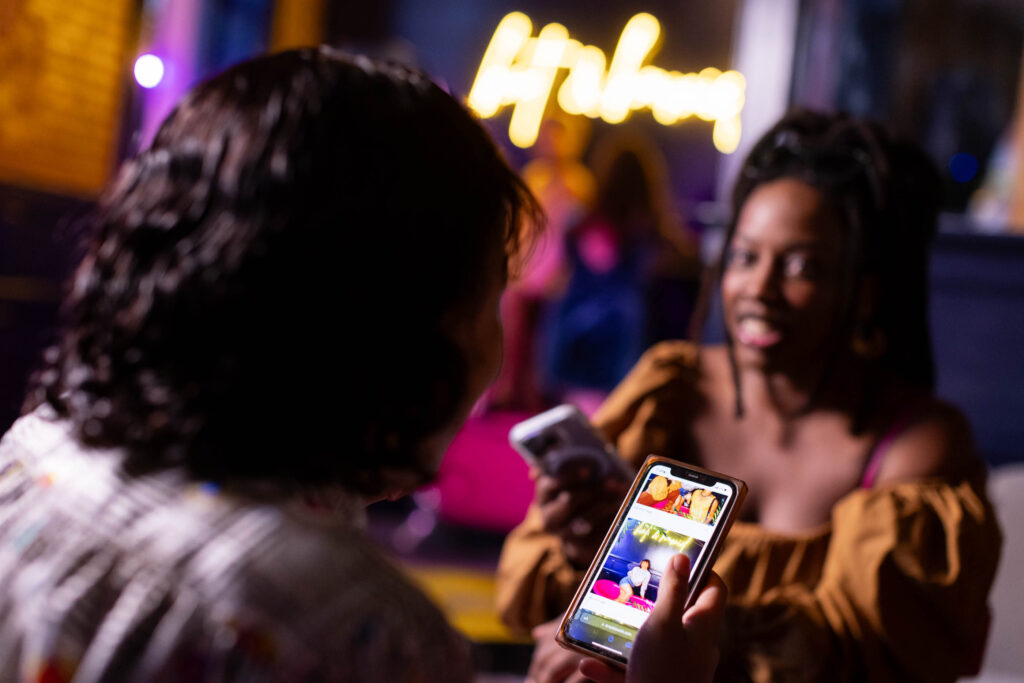
Even if your logo isn’t on the photo itself, your software can still go to work for you. You can customize the text messages, emails, and online galleries where guests go to download their photos. By keeping your branding and contact info front and center during the digital delivery process, you ensure every single guest interacts with your business in a professional, unobtrusive way.
3. Strategic B2B Networking
While B2C (Business to Consumer) marketing gets you single bookings, B2B (Business to Business) networking builds empires.
A bride might book you once in her life. A local wedding planner, however, can book you twenty times a year. In the event industry, networking with complementary vendors is your golden goose.
Identify the top wedding planners, luxury event venues, high-end DJs, and corporate event coordinators in your city. Reach out and offer to provide your booth for free (or at a steep discount) for their next industry networking mixer or open house. Once they see how sleek your setup is and how much fun their guests have, they will confidently add you to their “Preferred Vendor List.” Earning a spot on a high-end venue’s preferred list is the closest thing to guaranteed passive income in this industry.
4. High-Intent Advertising & Local Listings
Forget taking out ads in local newspapers or generic magazines; that is a waste of money in 2026. If you are going to pay for advertising or spend time on listings, you want to capture people exactly when their wallets are out.
- Google Business Profile (Local SEO): Before you spend a dime on ads, claim your free Google Business Profile. Fill it out completely with your address, service areas, high-quality photos, and ask every happy client to leave a 5-star review. This is the absolute best way to show up in the “Local Pack” (the map section of Google) when someone searches for a photo booth near them. Plus, AI chatbots rely heavily on these local business directories and reviews to formulate their recommendations!
- Google Ads: Bidding on local search terms (e.g., “Corporate photo booth rental Dallas”) puts you at the very top of Google the exact moment an event planner is looking to hire someone.
- Targeted Social Ads: Running Meta (Facebook/Instagram) ads targeted at newly engaged couples in your zip code is a highly effective way to fill your wedding calendar.
- Industry Directories: Depending on your market, paying for premium placements on event sites like The Knot, WeddingWire, or local corporate event directories can yield a massive ROI, provided your profile is packed with stunning, high-quality images.
Pro tip: The success of any advertising channel depends heavily on your specific market. Treat paid ads as a science experiment: start with a small budget, track which platform actually results in signed contracts, and double down your money there.
Step 6: Get Out There! 🚀
“Wherever you see a successful business, someone once made a courageous decision.”
-Peter Drucker
Okay, the foundation is laid. You’ve picked the right photo booth, developed a tight business plan, figured out premium price points, and your marketing machine is turned on. You’re ready to get out there. But how do you actually execute those first few events and close the deals?
The Stress-Test (Don’t Practice on Paying Clients)
If you are charging premium rates, your clients expect a flawless, premium experience. You cannot afford to figure out software settings or realize you forgot a power cable while a bride is waiting in her wedding dress.
Before your first paid gig, perform a rigorous stress-test. Set the entire booth up in your living room, or better yet, sponsor a community event for practice. Create a master packing list. Run through the software, test the printer (if using one), break it all down, and pack it into your vehicle.
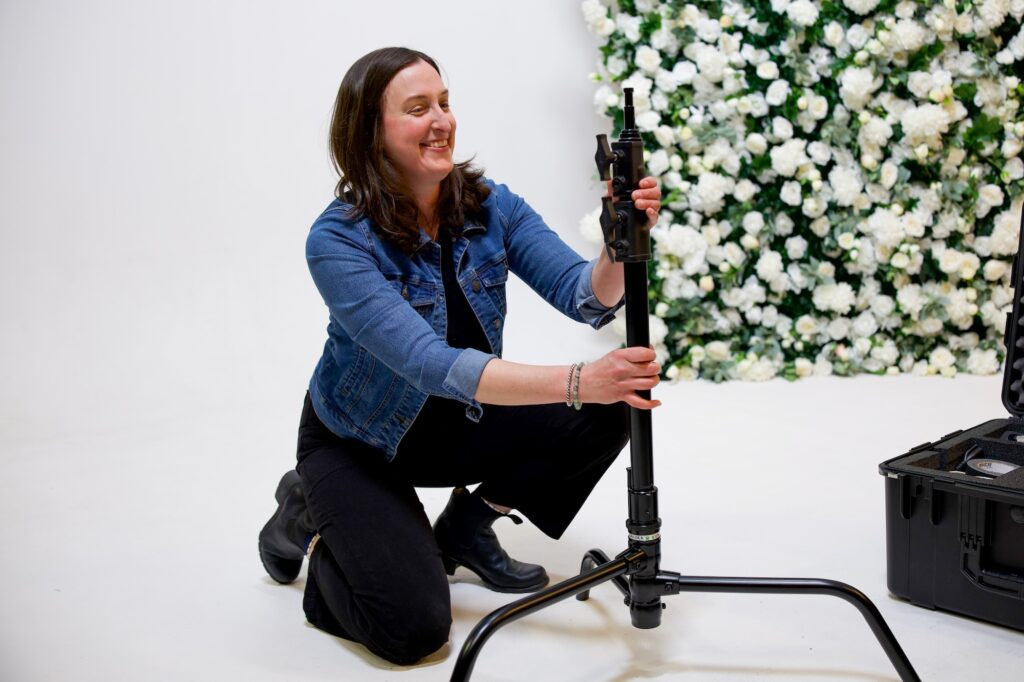
Strategic Portfolio Building: While we aren’t typically fans of working for free, donating your services to one high-profile local charity gala or industry vendor mixer is the best way to run a real-world trial. Not only does this let you test your workflow under pressure, but it is the ultimate “hack” to capture stunning, high-quality photos of real people using your booth. You can instantly use that content to populate your website and social media so your brand looks established on day one.
You Caught a Lead! The 4-Step Framework to Close the Deal
Your marketing worked, and an inquiry just hit your inbox. How do you ensure they book with you instead of the competitor down the street? Follow this modern sales framework:
1. The 5-Minute “Speed to Lead” Rule
In the modern event industry, the vendor who responds first usually wins the contract. If an event planner or bride fills out your contact form, you need to respond within five minutes. If you wait 24 hours to reply, they have already reached out to three other local photo booths and likely booked one.
Pro tip: Use a modern photo booth booking software (like Check Cherry or BoothBook) to send an automated, friendly response the exact second an inquiry comes in, letting them know you are reviewing their date and will be in touch shortly.
2. Sell the Experience, Not the Specs
When you get the client on the phone or over email, do not overwhelm them with technical jargon. The client doesn’t care about the lumen output of your ring light or the megapixel count of your camera. They care about the result.
Instead of saying, “We use a high-CRI continuous LED,” you say, “Our lighting acts like a digital airbrush, ensuring every single guest looks absolutely flawless.” Focus on how much fun their guests will have and how incredible the memories will look.
3. Be the Expert Consultant (The Upsell)
Don’t just act like an order-taker; act like an event expert. Ask them questions about their venue, their theme, and their timeline.
If they mention it’s a 1920s Gatsby-themed corporate party, say, “That sounds incredible. We actually offer a Kardashian-style black-and-white Glam filter with a custom art-deco overlay that would look stunning with that theme. Should I add that to your proposal?” You are providing massive value while effortlessly steering them toward your high-margin add-ons.
4. Remove the Friction and Ask for the Business
Do not make it difficult for your clients to give you their money. Gone are the days of emailing PDF contracts that clients have to print, sign, scan, and mail back with a physical check.
Use a streamlined digital booking system. Send them a beautiful digital proposal where they can view your tiered packages, click the one they want, sign a digital contract on their smartphone, and pay the deposit via credit card in under two minutes. Be confident, send the link, and say, “Whenever you are ready to secure your date, you can complete the booking right here!”
Step 7: Deliver a 5-Star Client Experience ⭐
“The customer’s perception is your reality.”
-Kate Zabriske
At last, your photo booth business is up and running. You’ve successfully marketed your brand, closed the deals, and your calendar is filling up. Fantastic! But your job isn’t done yet.
In the premium event industry, the real money is in repeat business and word-of-mouth referrals. Earning a client’s business once pays the bills; turning them into a raving fan builds an empire. To ensure event planners and brides recommend you to everyone they know, you must deliver a flawless, 5-star customer experience from setup to breakdown.
1. Cultivate a Premium On-Site Aesthetic
If you are charging luxury prices, your setup must look luxurious. Functionality and a pleasant attitude are the bare minimum.
To stand out, obsess over the details: tape down and completely hide every single power cable. Wipe down the camera lens and touchscreen so there isn’t a single fingerprint. Dress to match or exceed the formality of the event. Furthermore, don’t just act like an “attendant” who stares at a smartphone all night. Act like a “Booth Director.” Engage with the guests, compliment their outfits, suggest hilarious poses, and bring an infectious energy to the room.
2. Always Have a “Plan B”
Technology glitches happen, but the client should never notice them. A true professional brings backups for everything that could possibly halt the event.
Bring extra power strips, an iPad charger, backup lighting, a spare Wi-Fi hotspot, and extra printer media. If the venue’s internet drops, your software’s offline-queuing feature should seamlessly take over without the guests ever knowing there was a hiccup.
3. Prove Your ROI (For Corporate Clients)
While brides want memories, corporate clients and brand marketing agencies want data. When a corporate event wraps, don’t just send an invoice. Send a comprehensive, branded post-event analytics report generated by your photo booth software.
Show them exactly what their money bought: “We captured 450 emails, generated 600 text message shares, and your branded digital overlay reached an estimated 15,000 people on Instagram.” When you hand a marketing director hard data that proves a positive Return on Investment (ROI), you guarantee they will hire you for their gala again next year.
4. Automate the “Review Loop”
As we mentioned in Step 5, 5-star Google Reviews are the absolute lifeblood of your Local SEO and chatbot recommendations. However, timing is everything. Do not ask a bride for a review while she is exhausted at the end of her reception.
Instead, automate a polite, personalized email to go out three days after the event. Give them the link to their public online photo gallery to relive the fun, and say, “If you and your guests loved the photo booth, the biggest compliment you can give us is a 5-star review here.” Make the link one click away.
5. The Art of “Surprise and Delight”
Don’t forget to show genuine gratitude to your clients. In a world of automated emails, a personalized, handwritten thank-you note stands out massively.
Consider sending the client a small, unexpected gift a week after the event—like a high-quality, framed print of their best photo booth shot. It costs you less than $10, but that photo will sit on their desk for years, acting as a permanent billboard for your business every time a friend asks, “Who did the photo booth at your wedding?”
Your Next Step Starts Here
Starting a photo booth business is one of the most exciting, flexible, and profitable leaps you can take as an entrepreneur. The demand for real, in-person memories is higher than ever, and the technology has never been more powerful. We hope this guide has given you the confidence, the inspiration, and the exact roadmap you need to turn your vision into a reality.
If you’re ready to take that next step—whether you are launching a brand new venture from scratch, or you’re an established DJ, photographer, or venue owner looking for the ultimate high-ticket upsell to offer your current clients—don’t hesitate to reach out to our team here at Simple Booth.
At Simple Booth, we live, work, and breathe this industry, and we designed the Simple Booth HALO® and our industry-leading software to give you a massive competitive edge right out of the box. From studio-quality lighting and flawless skin-smoothing Glam filters to cutting-edge AI transformations, we make it effortless to deliver the premium, high-ticket portrait experiences that modern clients crave.
Ready to Grow Your Business?
But we didn’t just build it for the guests; we built it for your business growth. Simple Booth provides a rock-solid, reliable platform you can depend on for the most demanding, fast-paced events.
With instant digital delivery, customizable branding, and real-time analytics that track shares, views, and engagement, you can offer corporate clients the exact data-driven marketing results they are happy to pay top dollar for.
The opportunities are out there waiting for you. Reach out to us today, and let’s build something amazing together!
Ready to take the first step in launching your photo booth business?